Donate Us

Showing posts with label Blog. Show all posts

Thursday, December 5, 2019

December 05, 2019

What is data science | why you should learn data science

How data science has grown: A recap


The term Data Science must have crossed your eye multiple times. Trust us; this is not just a mere coincidence; it is associated with you. In this article, we are going to explain how data science can be related to almost everyone who is working in this span.

What is Data Science?
Data Science is an amalgam of various tools, algorithms, methods to solve complex issues that emerged from all the information collected from the raw data. To foresee future problems and preparing models based on it is what a data scientist is ought to do. The aspect of data science is finding the necessary information from the raw data unveiling the hidden insight that can help the company to make quicker decisions. To make you understand even better here are some of the examples of how Data science works:
1. Netflix works on the understanding of your searches and sees what genre entertains you the most. Based on this information they take decisions on what kind of web series to produce and stream.
2. Spotify recommends music to you based on your choices.
3. Gmail manages to work with an algorithm to determine if the mail is junk or not and automatically sends it into the spam folder.
And now, let’s have a look at how Data Science has unfolded in the past few years:
Data Science and statistics are related
The saying that Data science can’t be more than statistics might not be entirely correct, but to an extent, it is, as most of the current lot has drifted from the engineering field. Recent researches have proved that a notable portion of data science will soon be fully automated. In many cases, nowadays a whole lot of individuals are floating in from different backgrounds, even people from economics backgrounds are guaranteeing to be Data Scientists.
Transition from Data- poor to Data -rich
As the organizations are approaching from data-poor to data-rich culture, both, a strong foundation in data science and pure science will be required. With the ever-growing speed in this industry, the enterprises are always trying to build new models and expand on the decisive learnings; the supply will indefinitely decrease. Individuals, after being in this field for a very long time are ready to turn into the profession of Data Science. You surely can’t become a data analyst with just one analytics track or a few months of online certification. Also, hands-on experience can help you in getting a clearer picture of the most critical problems related to Data Science.
Working with noisy-datasets
The current focus of big organizations is on using big data which develops analytics solutions to satisfying client goals. The natural substance of what data scientists do stays puzzling. To explain more, Data Scientists are nowadays are confronted to operate with challenging, heterogeneous and noisy datasets. Most newbies are not even aware of trending technologies and cutting-edge techniques. They have to bridge the gap between their current abilities and skills actually to approach a higher set of possibilities to solve any problem.
Knowledge of applied science wins
The Data Scientists who genuinely deeply learned the statistical strategies are kept in secret to prepare the essential elements which automatically get coordinated with the tools. Having a deep understanding of the statistical foundation might be helpful for you in the long run.
What the future looks like?
According to Gartner’s research, by 2020, a significant part of data science will be automated. The tasks like recognizing the problem initially and data representation will be automated. And the remaining tasks which are model validation, feature engineering, machine learning and understanding the domain will be the core skills set to be a Data Scientist. Eventually, the interest to code as professionals who were mostly reliable on spreadsheets will shift to Python and R.
December 05, 2019

Python Vs java | java is best or python

Python vs Java: How Do They Compare?

When it comes to programming and coding, the programming language plays only half the role. Most of the heavyweight work is done by the coder to think on his toes - regardless of the language. That said, it is still an example of a situation if you are new to the world of programming, but few know about the differences in different programming languages. Today we look at a comparison of two of the most popular languages   among developers back and forth - Java and Python,

Both of these programming languages   have their similarities and unique features that distinguish them. The most striking similarity between Python and Java is their 'object-oriented' design. However, they also have prominent differences.

Let's look at the areas where Python and Java differ.

Dynamic vs. Static Typing

The main difference between Python and Java is that although the former is typed dynamically, the latter is typed statically.

When we say that Python is dynamically typed, we mean that Python allows you to change the type of variables. For example, you can replace an integer in your code with a string. However, you must ensure that the object to which a name refers supports the operations needed to execute that specific object in the code. For example, a code may contain two types of objects: Cat and Dog. Although Cat and Dog can both support the operation 'run', it also corresponds to 'friend'. As long as the code only refers to the normal operation 'run', it does not matter if it relates to Cat or Dog. This is known as "Duck Typing."

In contrast, Java requires that you define the variable type strictly once you first enter it into the code. You cannot change the variable type later in the program. This is known as static typing.

While many coders argue that dynamic typing is convenient and more comfortable to work with, others will argue that static typing helps reduce the risk of undetected errors in the code.

Indentation vs. Braces

Like most programming languages, Java uses curlers to define the beginning and end of each function and class in the code. On the other hand, Python uses indentation to separate the code into blocks. An advantage of setback is that it allows you to set up your program in a way that is easier to read and understand. Also, there is no possibility of errors in the code due to decomposition. However, while working with Python, make sure you end the indentation with a colon.

Compatibility vs. Speed

When it comes to portability and compatibility, Java has the upper hand over Python - it can be used to design platform-independent apps. If any device (computer or mobile) can run JVM, it can support Java applications without any problems. Looking at how popular Java is for web and desktop applications, it can be safely assumed that most devices are JVM integrated. So they can run any Java application efficiently. In contrast, you need a compiler to run Python programs to convert the Python code into the version compatible with your operating system. However, if a Java code runs on JVM, it usually runs slower than Python codes.

When comparing these features, Python is recommended by most programmers as the easy language of the two, ideal for newcomers. However, Java occupies a prominent place among programming languages   and is widely used for the development of Android apps and web apps. No matter what language you choose, you must remember that programming is fundamentally about logic. It's about building your computer skills. The key is to be versatile. If you have mastered one programming language and have the basic understanding of programming concepts, you can easily switch to any other programming language.


All of these differences will help you choose a language to start with.
Written by Pushpendra Singh.
December 05, 2019

What is comparative programming and why it is important


The What and Why of Competitive Programming


There’s always one coder friend in any friend circle who’s an expert at writing efficient codes quickly. They can get their way across any programming problem because of their grassroots level understanding of things backed by extensive practice. If you, too, have one such friend, and you’re always in awe of them, let’s tell you their secret – competitive programming. More often than not, such sharp brains are a result of patience and perseverance developed through competitive programming. The ability to think on your toes even under pressure is a must have in any coder, and competitive programming helps you master that.
Like every other competitive parallel, competitive programming also aims at subjecting the participants to problem/s under strict time constraints Competitive programming helps you develop quick-thinking skills without feeling the pressure of time. This skill will take you a long way in any career of your choosing.
So, competitive programming tournaments are mind-sports that thoroughly test your logical reasoning skills primarily, and coding skills secondarily. These contests are held all over the year and are hosted by some of the respected organizations. Pioneer and the oldest among them is ACM – ICPC started in the 1970s.
Typically a competitive programming event is centered around a set of problems, presented to the participants (few hundred to a few thousands in number). Nature of the problem is often mathematical or logical. The primary objective of these online events is to have contestant write source code in a programming language (usually of their choosing) to test algorithm construction and implementation capabilities.
To excel at competitive programming, not only do you need to be fast, but also thorough with the basic concepts of programming and algorithms. Even the most challenging problem you’ll encounter can be broken down into simpler sub-problems that can be quickly solved if you’re aware of the underlying algorithms and data structures.
Like we said earlier, competitive programming is more of a stress-test than programming test. So, a few basic concepts other than the knowledge of coding and algorithms that’ll come handy are:
  • Common Sense
  • Complexity Analysis (Often underlooked by beginners, but, if you ignore it, you will understand its importance after a myriad number of TLEs)
  • Number Theory
  • Combinatorics & Probability
  • Geometry & Math in general
  • The art of debugging
Now, from a Computer Science perspective,
  • Binary Search
  • Sorting algorithms
  • String search algorithms
  • Dynamic Programming
  • Linked Lists
  • Trees
  • Disjoint sets
  • Depth First Search & Breadth First Search
  • Dijkstra’s algorithm
Such programming events can be broadly divided into two categories:
  • Short-term: duration being a few hours
  • Long-term: which may last from a few days to a few months. Some well-known examples are Google Code Jam, HackerRank, Facebook Hacker Cup, IOI, CodeChef, and many more.
Because competitive programming is all about applying right logics at the right time, people find it extremely cumbersome. But, there’s nothing that can’t be conquered with dedicated guidance. At Coding Ninjas, we realize the importance of such competitive programming contests for strengthening the logical capabilities of an individual. Not only that but winning at such cut-throat competitions also gives you the boost you need to grow stronger in your career.
Owing to their vastly varied problem sets, competitive programming events are a playground for coders as they give ample opportunity for honing the coding skills, while at the same time offering a chance of gauging their programming skills on a global scale. Apart from providing these opportunities, such events serve as an excellent platform for top scorers for attracting recruiters like Google, Facebook, IBM, and others. So this can be your launch pad in your journey of finding a career in hardcore programming with leading software/product-based companies.
Keeping all this in mind, we have come up with a dedicated and structured course that guides you through the intricacies involved with competitive programming. With the guidance from our expert instructors, students after training are ready to take on such challenges head-on and with confidence. We have both online and offline classes for you to try.
Just by the way – our online classes are just offline classes gone digital. All of the perks of the offline mode of learning combined with the comfort of studying at your time and pace. If you don’t believe us, do check it out for yourself. There are also trial classes available to make you doubly sure.
So put your thinking caps on and happy coding.
PS: There’s also an early bird discount. So, come on in, QUICK!

Sunday, December 1, 2019

December 01, 2019

How to build an awesome resume worthy for Google, Facebook or Amazon?


You have completed your education or you are near the end of your final session. Now, you are ready to apply for jobs in top tech firms. The common dilemma among several aspiring job applicants is: How do I start? Well, the first step is by crafting a fantastic resume. The famous saying ‘First impression is the last impression’ turns out to be quite true when you apply for jobs. Your first impression is the resume. The presentation of your resume, along with the credentials, will make it stand out among the thousands of applications that tech firms receive. The competition is extremely high, and you must have everything in your favour to get to the interview level. Here are some of the ways in which you can make your resume stand out:
  1. Resume length
resume-length
Your resume should not be more than one page. Recruiters have limited time, and they will always prefer brief and concise resumes. If your resume is long, the chances are that the recruiters will just shove it away and pick up the next one.
  1. Making it readable
Just opting for a concise resume will not work. Cluttered and unattractive resumes will put off the recruiter instantly. So, increase the readability of your resume by proper spacing, bullet points, and using an appropriate font. However, do not make it too extravagant. Find a balance to keep the resume attractive and informative.
  1. Sections
image-classification
Your resume should be divided into several brief sections: Contact Information, Education, Work Experience, Personal Projects, Skills and Interests, and finally, Honors and Awards (if any). Out of these, Personal Projects might be the one section that attracts the recruiter most, so, ensure that you add it.
  • Contact Information: The contact information should be next to your name and should be easy to spot. Your name should be placed at the top of the resume. Then, you should put your phone number, address, email, and social media links like Facebook and LinkedIn.
  • Education: The education section should be brief and should list your education in descending order. If you are a graduate, then you should first place your most recent college education (related to technology). If you have any additional certificates, list them properly after your college education. If you are still a student, then mention that you are still pursuing a specific course. This shows that you are willing to learn more. However, only include the courses which are related to the job you are applying for. A course in ‘English Language’ will not help if you are going for a technical position.
  • Work Experience: The recruiter will not focus on all kinds of work experiences that you might have. So, it’s always better to enumerate those kinds of work experiences which show that you are suitable as a software engineer or a good coder. Mention the firms you worked for and your job position in them. Also, list the achievements under every job title. If you do not have any work experience, then you can skip this section and go for the Personal Projects section.
  • Personal Projects: This section is quite unique for software engineers. In this section, you have the freedom to include many independent projects that you have undertaken besides your college projects. This could include Python scripts, a working web page, developing a mobile application, etc. The more personal projects you add, the more creative you will appear to the recruiter. It shows that you are willing to take the initiative and build something independently.
  • Skills: In this section, you can add key technical words and skills asked in the job description. The more skills you add, the higher will be your chances of getting recruited. Only add the skills relevant to the job position that you are applying for. However, don’t just randomly add whatever skills you find in the job description. You will be questioned on each of the skills that you mention.  
  • Honors and Awards: You have included all the relevant credentials in your resume. Now, it’s time to back them up with some awards and honors. If you have received any scholarships or awards in the technical field, this is the section where you mention them. It will make you appear as a reliable and high-performing individual.
So, while you are crafting your resume, keep these important pointers in mind. Let your powerful resume speak for you and you can expect a call for Google, Facebook, or Amazon at any moment! Keep your fingers crossed. 

If you want to design resume then message us on pushpendra7060@gmail.com.
December 01, 2019

How to improve coding Skills.


  • Written By Pushpendra Singh
  • Selected in uber

As technology continues to evolve, your success as a coder depends on your capability to learn and adapt. Any seasoned developer knows that you should always try to improve your coding skills. 
There is no point in watching your colleagues get ahead while you are still stuck doing the same thing over and over again. On that note, here are some of the tips to improve your coding skills.
  • Practice. Practice. Practice
good-coding-practice
Coding is a skill that requires a ton of practice and effort to master it. You can’t just wake up one day and suddenly become good at coding. All the good engineers out there have worked countless days and nights to perfect their coding skills. Therefore, you should not quit when you start your journey as a programmer or coder. 
Try to make it a habit to code each day, no matter what programming language it is. Because what actually matters is that you are doing it every day. An algorithm is nothing but an ordered set of operations carried out for the sole purpose of finding a solution. So, try to work on various problems to find better logics and enhance your code. 
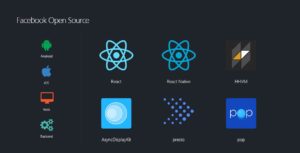
  • Contribute to open-source projects
facebook-open-source
A part of learning is sharing your knowledge. You should contribute your code or program to 
open source platforms, such as GitHub, to improve your programming skills and become a better coder. 
Show interest in discussions between experienced programmers, listen to what they have to say. Try to understand their approach to the problem that will automatically develop good coding habits on you.
However, you must not just sit passive, rather ask questions, present your suggestions while respecting their point of view.
  • Find mentors
Try to work one-on-one with other developers in any way you can. It is always good to listen to other coders. You can do so through pair programming, participating in hackathons or joining a coder user group. 
Pay attention to the feedback that you get on your projects from other users and developers. Try to identify the commonalities in their criticism. There is always going to be someone who has more experience and knowledge than you. 
You may also get a mentor this way whom you can trust to guide you in everything from programming techniques to career decisions. A mentor will be honest with you about your 
coding skills and give you suggestions accordingly. Do not let go of such opportunities.
  • Create a project and make it live
With enough practice, you will be able to build your own projects and applications. It could be a web application, or a mobile app or any other tool. Don’t keep it confined with you. Share it with the world and watch other people use your code.
This will boost your confidence to a great extent and also motivate you to code even better. There are various platforms where you can share your code and projects. Even if you have a full-time programming job, you must always have a side project to work on. This is the best way to practice and challenging yourself. 
Another benefit of sharing your project with others is that it demonstrates your skills to future employers and potential clients. 
  • Attend meetups and observe
Attending meetups and discussing with fellow programmers often leads to better solutions. Your mind tends to evolve more when you talk and listen to others. Often programmers tend to isolate themselves with their computer. This is a completely wrong practice.
Take out time every week to explore new languages and technologies that are shaping the world. Find new sources of information to regularly tap into for inspiration. Observe the coders that you admire and follow their practices. 
Bottom line
A last piece of advice – stay fit and healthy and use the correct equipment. Otherwise, you can easily wreck your back, shoulders, and wrists by sitting in front of the PC for hours every day. You might already know most of the suggestions – sit straight, eat healthy food, and do exercise.
These tips will not only enhance your coding skills but also make you enjoy the learning process even more. Looking to take up a course? Well, CodingNinjas is just the right place for you.

Popular Posts

COO Prime Naukri

COO Prime Naukri

Total Pageviews

Tags

Popular Posts